
Act of Donation in Louisiana: Requirements, Limits, and Common Mistakes
By Claire Benoit
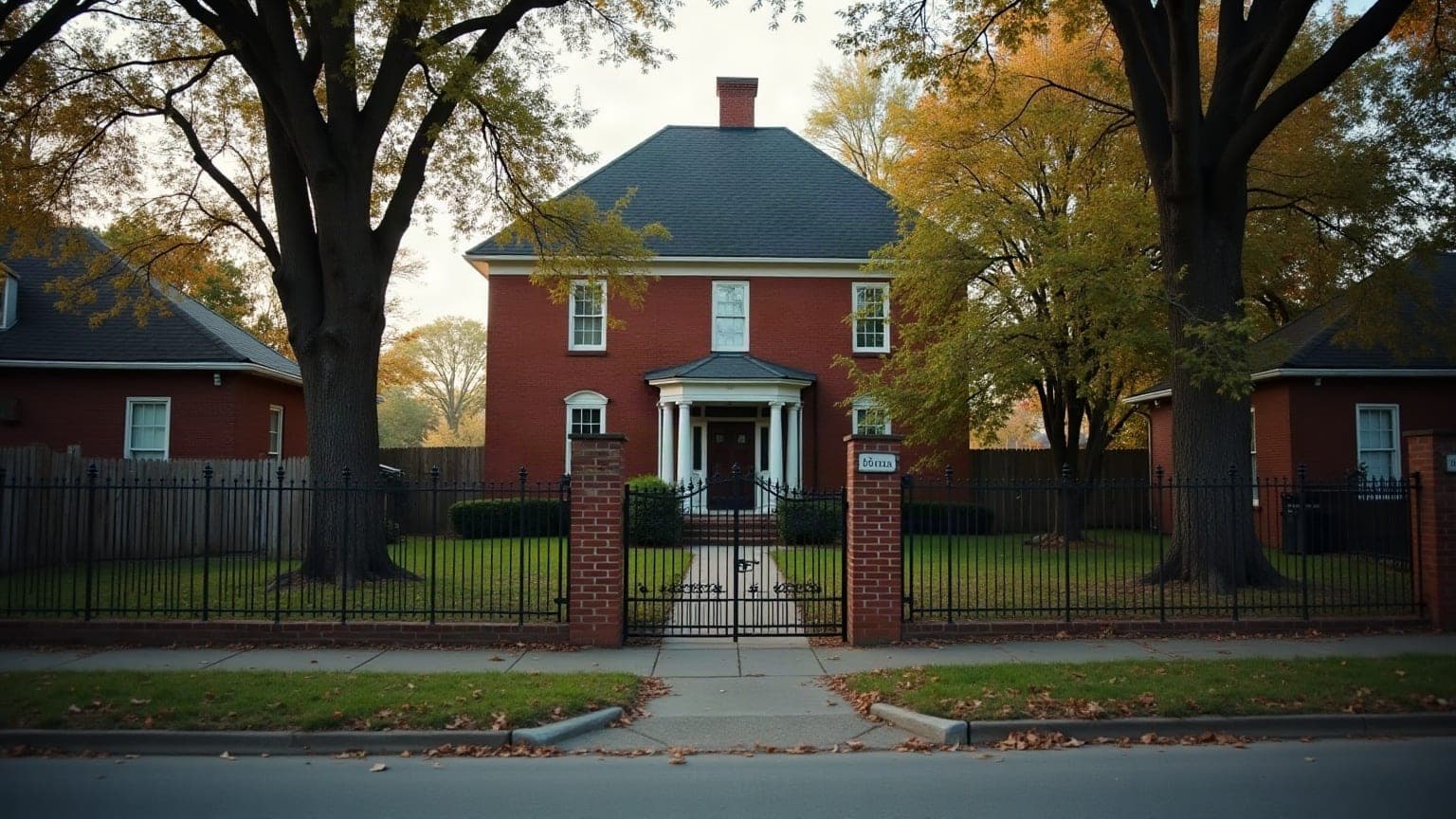
The direct answer: An act of donation in Louisiana is the formal, notarized document required to give away immovable property, such as a home or land, and most other significant property, without payment in return. La. Civ. Code art. 1541 requires that a donation inter vivos be made by authentic act — signed before a notary and two witnesses — under penalty of absolute nullity, meaning a donation that skips this formality is void as though it never happened, with narrow exceptions such as the manual gift of a movable handed directly to the recipient. An act of donation must also be accepted by the recipient during the donor's lifetime, and a donation of immovable property must be recorded in the parish conveyance records to affect third persons and to actually transfer record title.
This article explains what an act of donation must contain to be valid, how a donor can reserve a usufruct while giving away ownership, the limits Louisiana law places on how much a person can give away, and when a completed donation can later be undone.
What an act of donation is, and what it is not
Donation inter vivos, not donation mortis causa
La. Civ. Code art. 1468 defines a donation inter vivos as a contract by which a donor "gratuitously divests himself, at present and irrevocably, of the thing given in favor of another... who accepts it." The key word is "present": an act of donation transfers ownership now, during the donor's lifetime, which sets it apart from a donation mortis causa, the legal term for a gift made by testament that takes effect only at death. A last will and an act of donation accomplish very different things and follow different formal rules, and confusing the two is a common and costly mistake.
What can be donated
An act of donation can transfer immovable property such as land or a home, corporeal movables such as vehicles or furniture, and incorporeal rights such as stock or a partial interest in a mineral lease. The formal requirements differ depending on what is being given, discussed below.
The formal requirements for a valid act of donation
The authentic act requirement
La. Civ. Code art. 1541 requires that a donation inter vivos be made by authentic act, under penalty of absolute nullity, unless the law expressly permits another form. An authentic act is a specific, formal document: it must be signed before a notary public and two competent witnesses, and the donor, the donee (if a party to the act), each witness, and the notary must all sign, with each person's name printed or typed legibly beneath the signature. This is a materially higher bar than an ordinary signed and witnessed document, and a donation that does not meet it is not merely voidable — it is treated as if it never occurred.
The manual gift exception for movables
La. Civ. Code art. 1543 creates a narrow exception: the donation of a corporeal movable may be made simply by delivering the thing to the donee, without an authentic act or any other formality. Handing someone a piece of jewelry, a vehicle title already properly assigned, or a piece of furniture with the clear intent to give it away can validly transfer ownership under this manual-gift rule. This exception does not extend to immovable property, to incorporeal rights, or to a promise to give a movable in the future; it applies only to an actual, completed delivery of a tangible object.
Acceptance: a donation is not complete until accepted
Under La. Civ. Code art. 1544, a donation inter vivos has no effect until the donee accepts it, and that acceptance must occur during the donor's lifetime. Acceptance can be stated directly in the act of donation itself, given later in a separate writing, or, for a movable, shown by the donee's simply taking possession of the thing. La. Civ. Code art. 1545 allows a donee to accept personally or through a mandatary with authority to accept on the donee's behalf. A donation the intended recipient never accepted before the donor's death generally fails, which is one reason a completed act of donation addresses acceptance expressly rather than leaving it to be inferred later.
Donating immovable property: recordation and practical mechanics
An authentic act satisfies the Civil Code's form requirement, but for a donation of immovable property to bind and affect third persons — a later buyer, a mortgage lender, or a judgment creditor, for example — La. Civ. Code art. 3338 requires that the instrument be recorded in the conveyance records of the parish where the property is located. Recordation is what actually updates the public record to reflect the donee as the new owner and protects the donee's ownership against someone who might otherwise rely on the prior recorded owner. In practice, an act of donation of land or a home in Ouachita Parish or a neighboring parish is prepared, executed as an authentic act, and then promptly recorded with the parish clerk of court, much like a sale of the same property would be.
Reserving a usufruct: a common estate-planning use
A donor does not have to give away full, unrestricted ownership all at once. La. Civ. Code art. 544 allows a usufruct to be established by an inter vivos juridical act, including a donation, which lets a donor transfer the naked ownership of property — most often a home — to a donee, typically a child, while reserving for the donor a usufruct: the right to live in, use, and enjoy the property for the donor's own lifetime or for a fixed term. This structure is a frequently used estate-planning technique in Louisiana precisely because it lets a parent transfer the underlying property to children now while continuing to occupy and control the home exactly as before, with full ownership consolidating in the children only once the usufruct ends.
Limits on donations under Louisiana law
A donor cannot give away everything
La. Civ. Code art. 1498 requires a donor to reserve enough property for the donor's own subsistence; a donation inter vivos can never divest the donor of the donor's entire patrimony. A donation of a movable made in violation of this rule is null for the whole, and a donation of an immovable is null for the whole unless the donee has since sold it to a third person for value. This rule exists to prevent a donor from being left destitute by an act of generosity, however well-intentioned.
Forced heirship and the legitime
Louisiana's forced heirship rules limit how much a person can give away, by donation or by testament, when the donor has a forced heir. Under La. Civ. Code art. 1493, a forced heir is a descendant of the first degree who is 23 years of age or younger at the donor's death, or a descendant of any age who is permanently incapable of caring for themselves or managing their own estate because of mental incapacity or physical infirmity. A forced heir is entitled to a minimum share of the donor's estate, called the legitime, and under La. Civ. Code art. 1503, donations that exceed the portion the donor was free to give away can be reduced after the donor's death to restore that minimum share. A donation made years earlier, and long since accepted and recorded, can still be revisited in this way once the donor dies, if it turns out to have impinged on a forced heir's legitime.
Collation: donations to a child as an advance on inheritance
Separately from forced heirship, La. Civ. Code art. 1235 addresses collation, the process by which a descendant who received a donation during the donor's lifetime may be required to account for it against that descendant's share of the donor's succession, so that the estate is divided fairly among the other heirs. The right to demand collation belongs to descendants who qualify as forced heirs, and it applies to gifts made within a defined period before the donor's death. An act of donation to a child is not automatically an outright, no-strings gift for succession purposes; whether and how it factors into that child's eventual inheritance depends on the specific facts and on whether the donor expressed an intent that the gift be exempt from collation.
Revoking or undoing a completed donation
Revocation for ingratitude
Although La. Civ. Code art. 1468 describes a donation as irrevocable at the moment it is made, Louisiana law recognizes specific, narrow grounds to revoke or dissolve one afterward. La. Civ. Code art. 1556 allows revocation for the donee's ingratitude or dissolution for the nonfulfillment of a condition attached to the gift. Under La. Civ. Code art. 1557, ingratitude sufficient to support revocation is limited to the donee attempting to take the donor's life, or subjecting the donor to cruel treatment, crimes, or grievous injuries — an ordinary falling-out or family estrangement does not meet this standard. An action to revoke for ingratitude must generally be brought within one year of when the donor knew or should have known of the act of ingratitude.
Dissolution for unmet conditions
Where an act of donation was made subject to a condition — for example, an obligation that the donee provide care for the donor, or that the property be used a certain way — La. Civ. Code art. 1556 also allows the donation to be dissolved if that condition is not fulfilled. Because the outcome depends on exactly how the condition was written into the act of donation, the precise wording used at the time of the gift matters a great deal if a dispute arises later.
Common mistakes in acts of donation
A handwritten note, a text message, or an unwitnessed letter stating an intent to give away a house or land is not an act of donation under Louisiana law and generally has no legal effect, regardless of how clearly it expresses the donor's wishes. Likewise, an unrecorded act of donation of immovable property, even if properly executed as an authentic act, may leave the transfer vulnerable to a third party who is unaware of it and who later deals with the same property in good faith. And a donor who gives away a home to one child without considering forced heirship or collation can unintentionally create a dispute among siblings after the donor's death that a properly structured donation, made with those rules in mind, would have avoided.
The bottom line
An act of donation in Louisiana must be made by authentic act under La. Civ. Code art. 1541, accepted by the donee during the donor's lifetime under Article 1544, and, for immovable property, recorded in the parish conveyance records under Article 3338 to bind third persons. A donor can reserve a usufruct while donating naked ownership under Article 544, but cannot give away the donor's entire patrimony under Article 1498, and a donation to a child with a forced heir or another child can later be affected by forced heirship reduction or collation. Because the formalities are strict and the consequences of getting them wrong can surface only after the donor's death, a property owner in Monroe, West Monroe, or elsewhere in Ouachita Parish considering an act of donation is welcome to contact Hudson, Potts & Bernstein, LLP through our contact page to discuss the specific property and family situation.